
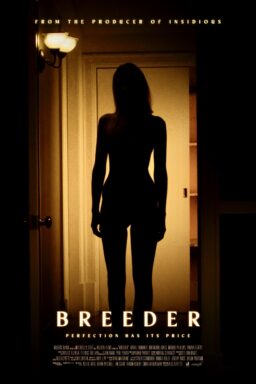
Breeder (2026) is a horror thriller with dark comedy, strange characters, and a disturbing story about control, money, and the dangerous desire to create what someone believes is a perfect human being. Directed by Alex Goyette, the film follows Russell, a researcher who struggles to find financial support for his work on protecting the bee population. When a wealthy dog breeder offers to fund his research, he believes he has found a way to move his project forward. However, the opportunity soon leads him into a frightening situation. Rotten Tomatoes
The film features Daniel Doheny, Dot-Marie Jones, Maddie Phillips, and Tanaya Beatty. Released in the United States on October 28, 2026, Breeder runs for approximately 97 minutes and combines horror, suspense, and uncomfortable humour. IMDb+1
What makes Breeder (2026) interesting is its unusual central idea. Rather than relying only on a monster or a traditional haunted location, the movie builds its horror around people who believe they have the right to control the lives and futures of others.
This review examines the film’s story, cast performances, themes, atmosphere, strengths, weaknesses, and the type of audience that may enjoy it.
Breeder (2026) Movie Details
Breeder (2026)
Horror · Thriller · Dark comedy
Director: Alex Goyette
Writer: Alex Goyette
Release date: October 28, 2026, in the United States
Runtime: Approximately 97 minutes
Main cast: Daniel Doheny, Dot-Marie Jones, Maddie Phillips, Tanaya Beatty
Distributor: Independent Film Company
Details verified against the film’s official distributor information. Independent Film Company+2
What Is Breeder (2026) About?
Breeder (2026) tells the story of Russell, a young researcher who is passionate about saving bees. His work is important to him because bees play a major role in pollination and the health of natural environments. However, having a good idea is not enough to guarantee success. Russell needs money to continue his research, and finding someone willing to support the project becomes a serious challenge.
His financial problems put him in a difficult position. He has spent considerable time working towards his goal, but he cannot easily move forward without the necessary funding. At the same time, his relationship with his fiancée, Haley, adds another personal concern. They have a future to build together, yet his research ambitions continue to demand time, attention, and money.
Things begin to change when Patti, a wealthy and eccentric poodle breeder, offers to finance Russell’s research. At first, the offer appears to be the answer he has been waiting for. Patti has the resources to help him, and the opportunity could allow him to continue work that matters deeply to him.
However, there is a condition. Russell must visit Patti’s isolated ranch and meet her family.
Although the invitation may seem unusual, Russell decides to consider it because he needs financial support. His decision takes him into an environment where ordinary expectations no longer apply.
Patti has ambitions that go far beyond dog breeding. Her ideas about reproduction, genetics, and the creation of supposedly superior offspring reveal a disturbing belief system. She wants to use her wealth and influence to control something far more personal than a research project.
Russell gradually discovers that the funding offer is connected to a plan he never expected. The situation becomes increasingly frightening as he realises that Patti’s generosity comes with conditions that threaten his freedom.
This is where the central conflict of Breeder (2026) becomes clear. Russell must confront a person who believes that money gives her the right to make decisions about other people’s lives. The story uses this conflict to explore power, manipulation, scientific ambition, and the dangers of treating human beings as objects.
The official synopsis confirms that Russell’s visit to Patti’s ranch leads him into a situation far removed from his original research goals. Independent Film Company
The Story and Plot Development
One of the most interesting things about Breeder (2026) is the way its story begins with a problem that feels believable.
Russell is not searching for danger. He is trying to find financial support for a project that he believes can make a difference. His need for funding is understandable, and this helps viewers recognise why he might consider an offer that would otherwise seem suspicious.
Many people have faced situations where an opportunity looks too good to ignore. It could be a job, a business partnership, a scholarship, or a promise of financial assistance. When someone is under pressure, the possibility of solving a major problem can make warning signs easier to overlook.
The film takes this familiar situation and pushes it into horror territory.
Russell’s financial struggle
Russell’s research provides the starting point for the entire story. He has a goal, but his limited resources prevent him from making the progress he wants.
This part of the film helps establish his character. He is committed to his work and willing to make sacrifices for it. However, his determination also creates a weakness that Patti can exploit.
His problem is not simply that he needs money. He needs money badly enough that he must decide whether an unusual offer is worth the risk.
That decision creates tension before the horror fully develops.
Patti’s invitation
Patti is introduced as a successful breeder with enough money to support Russell’s research. Her offer gives him a reason to visit her ranch, even though the arrangement is not entirely comfortable.
The isolated setting helps create a sense of unease. Russell is leaving the familiar world behind and entering a place where Patti controls the environment.
This is a useful setup for a thriller because the audience can begin to question the situation before the main character fully understands it.
Why is Patti so interested in Russell? What does she expect from him? Why is the funding connected to a personal visit rather than a straightforward professional agreement?
These questions help the film build suspense.
The discovery of Patti’s real intentions
As Russell spends more time at the ranch, the apparent generosity of Patti’s offer begins to look different.
Her interest in breeding is not limited to animals. She believes that selective reproduction can be used to create people who meet her standards of genetic superiority.
The idea is deeply disturbing because it turns a financial arrangement into a question of personal freedom. Russell is no longer simply discussing research funding. He is caught in a situation where another person wants to determine what he should do with his life.
The conflict also introduces the film’s darker themes. Patti’s beliefs raise questions about eugenics, consent, and the misuse of scientific ideas to justify controlling others.
Rather than presenting the antagonist as someone who wants money for its own sake, the film gives her a personal ideology. She believes that her goals justify her actions.
That makes the situation more uncomfortable because Patti does not see herself as an ordinary villain. She sees herself as someone pursuing a plan that she considers necessary.
The struggle to escape control
As the story develops, Russell must deal with the consequences of accepting Patti’s offer. His choices become more difficult, and the ranch changes from a possible source of financial assistance into a place of danger.
The tension comes from the difference between what Russell expected and what he actually encounters.
He arrived hoping to secure the future of his research. Instead, he must protect his independence and deal with a person who refuses to accept that other people have the right to reject her demands.
This is the point where the movie’s horror and thriller elements come together. The danger is not only physical. It also comes from manipulation, pressure, and the attempt to remove a person’s ability to make decisions freely.
The story’s central premise gives the film a different angle from many conventional horror movies, even though some parts of its structure will feel familiar to experienced viewers. Matthew Passantino, Big Picture Big Sound
Cast and Characters
The performances are important to Breeder (2026) because the story depends on the contrast between an ordinary researcher and a woman whose ambitions become increasingly frightening.
“Breeder” Premiere – 2026 Tribeca Festival
Daniel Doheny as Russell
Russell is the researcher at the centre of the story. His work on bees gives him a clear purpose, while his financial problems make him vulnerable to Patti’s offer.
Doheny’s character must move between professional determination, uncertainty, fear, and the need to protect himself. This makes Russell the audience’s main point of connection with the story.
Dot-Marie Jones – Artemis Women In Action Film Festival
Dot-Marie Jones as Patti
Patti is the wealthy breeder whose offer changes Russell’s life. She is central to the film’s disturbing atmosphere.
Her character combines confidence, control, and an unsettling belief that she has the right to direct other people’s futures. Jones’s performance has been singled out by reviewers as one of the film’s strongest elements. Matthew Passantino, Big Picture Big Sound
Maddie Phillips as Ainsley
Ainsley is connected to Patti’s disturbing plan and plays an important role in the story’s central conflict.
Her presence helps show that Patti’s ambitions affect more people than Russell alone. The character also adds another layer to the film’s treatment of consent, control, and individual choice.
Tanaya Beatty as Haley
Haley is Russell’s fiancée. She supports his ambitions but also understands that his commitment to research places pressure on their shared future.
Her role gives the story an emotional connection outside the ranch. Russell’s decisions affect not only his career but also the person with whom he hopes to build a life.
Other cast members include Paige McGarvin, Lillian Doucet-Roche, Carmen Moore, and several performers in supporting roles. Together, the cast helps establish the family environment surrounding Patti and the increasingly uncomfortable situation Russell enters. IMDb
Dot-Marie Jones as Patti: The Film’s Most Unsettling Character
Patti is arguably the most memorable character in Breeder (2026) because her behaviour challenges the audience’s expectations.
At first, she can appear to be an unusual but successful person who simply has strong opinions. She has money, a property, and a breeding business. She can offer Russell something he desperately needs, which gives her a position of influence.
However, her confidence gradually becomes more threatening.
Patti does not treat her beliefs as suggestions. She expects people to accept her way of thinking, and she is prepared to use her resources to push them towards the outcomes she wants.
This makes her frightening in a way that does not depend entirely on physical violence. She can make an ordinary conversation feel uncomfortable because the viewer understands that she is not approaching the situation as an equal partner.
The character also raises an important question: what happens when someone with money becomes convinced that their personal beliefs are more important than another person’s freedom?
Jones brings a strong presence to the role. Reviews have praised her ability to make Patti both frightening and darkly entertaining. Matthew Passantino, Big Picture Big Sound
For a horror film, a compelling antagonist can make a major difference. The audience needs to believe that the character poses a real threat, even when the character is not shouting or attacking anyone.
Patti’s disturbing quality comes partly from the seriousness with which she treats her own plans. She does not behave as if she is playing a game. Her confidence makes the situation feel dangerous because she believes she has every right to control it.
Daniel Doheny as Russell
Russell is a different kind of horror protagonist. He is not introduced as a trained fighter or someone looking for an adventure. He is a researcher who wants to continue his work.
His ambition is understandable, which makes his predicament easier to follow.
The character also reflects a familiar human weakness: the belief that a difficult opportunity may be worth accepting because the potential reward is so important.
Russell’s interest in the funding offer is not necessarily foolish. He has a project that needs support, and Patti appears to have the resources to help. The problem is that the arrangement comes from someone whose real intentions are far more disturbing than he expects.
This creates a conflict between ambition and caution.
Russell wants to move forward, but the opportunity threatens to take him away from the values that made his work meaningful in the first place. His experience forces him to reconsider what he is willing to risk for professional success.
Doheny’s performance helps carry the film because Russell gives the audience a more grounded perspective on the strange events around him.
Direction and Screenplay
Alex Goyette wrote and directed Breeder (2026), making the film his feature directorial debut. Dread Central+1
The screenplay builds its story around an unusual idea and uses that idea to explore several uncomfortable subjects.
One of its strengths is the way it connects the horror to an everyday problem. Russell’s lack of funding is not supernatural, and his desire to advance his research is easy to understand. This gives the story a foundation that feels more realistic than its increasingly strange events.
The screenplay then introduces Patti as a person who can solve Russell’s problem, only to reveal that the offer has a hidden cost.
This is an effective starting point for suspense because it creates two competing questions. The audience wants to know what Patti is planning, but it also wants to see how Russell will respond once he understands the situation.
The film combines horror with dark comedy. This approach can make the story feel unpredictable, particularly when disturbing ideas are presented through characters who behave as if their actions are perfectly reasonable.
However, this balance is not easy to maintain. A joke can reduce tension if it arrives at the wrong moment, while a serious scene can feel less effective if the comedy becomes too broad.
The film’s unusual premise gives Goyette plenty of material to explore, although some viewers may wish that certain ideas had been developed further.
A review published by Big Picture Big Sound also notes that the final section can feel rushed, even though the earlier tension remains effective. Matthew Passantino, Big Picture Big Sound+1
That observation points to a common challenge in horror filmmaking: creating a strong setup is one thing, but giving every major idea enough space in the final act is another.
Horror, Suspense, and Dark Comedy
Breeder (2026) is not simply a conventional horror movie built around sudden noises and frightening appearances. Its central concept provides much of its disturbing power.
The story places a person in an environment controlled by someone with extreme beliefs. The audience knows that Russell is in danger, but the precise nature of that danger becomes clearer as he spends more time at the ranch.
This gradual development allows the film to create suspense through uncertainty.
Psychological tension
Psychological horror often works by making viewers question whether a situation is safe. In Breeder, Patti’s offer creates that uncertainty from the beginning.
The ranch becomes increasingly uncomfortable as Russell learns more about the people around him. The danger grows from the gap between the arrangement he thought he had accepted and the expectations Patti actually has.
This is an effective way to build tension because the threat is connected to human behaviour rather than an unexplained supernatural event.
Disturbing ideas
The film’s treatment of reproduction and genetic superiority gives it a provocative foundation.
Patti believes that certain characteristics can be selected to produce supposedly better offspring. Her thinking turns the idea of breeding into an extreme attempt to control human life.
The horror comes from the belief that people can be reduced to their genetic traits and treated as tools for someone else’s plan.
This theme gives the movie more to discuss than a simple struggle between a victim and an antagonist.
Dark humour
The dark comedy adds another dimension to the story.
Some situations are disturbing partly because the people involved treat them as normal. That contrast can create uncomfortable humour, especially when the audience understands the danger more clearly than the characters appear to.
The comedy also makes the film less predictable in tone. Rather than maintaining one level of seriousness throughout, the movie moves between uncomfortable amusement and genuine threat.
For viewers who enjoy horror with strange characters and an unusual sense of humour, this may be one of the film’s most appealing qualities. Matthew Passantino, Big Picture Big Sound
Themes and Messages in Breeder (2026)
1. The danger of desperation
Russell’s financial struggle is the first major issue the film explores.
He needs help, and this makes him more willing to consider an offer that he might otherwise reject. The situation demonstrates how pressure can affect judgement.
When people are desperate to solve a problem, they may focus on the benefits of an opportunity while giving less attention to the possible consequences.
The film takes that idea to an extreme, but the underlying lesson is easy to understand. An offer should be judged by its conditions, not only by the reward it promises.
2. Money and power
Patti’s wealth gives her influence over Russell’s situation. She can offer the financial support he needs, but she also expects the arrangement to serve her own interests.
This creates an imbalance between the characters.
The film asks viewers to consider whether financial power can become dangerous when it is used to pressure others into doing things they would not freely choose.
Money can support valuable work, but it does not give anyone ownership of another person’s life.
3. Consent and personal freedom
Consent is one of the most important themes in the movie.
Patti’s plans challenge the idea that every person has the right to decide what happens to their own body and future. Her belief system treats personal freedom as something that can be set aside for a larger goal.
The film presents this as a source of horror.
A person may agree to discuss a business arrangement without agreeing to every demand that comes with it. Likewise, accepting financial help does not mean surrendering the right to make personal decisions.
4. The misuse of science
Russell’s research and Patti’s beliefs provide an important contrast.
Russell is working towards a scientific goal connected to bee conservation. Patti, meanwhile, applies ideas about selective breeding to an extreme and disturbing human project.
The contrast raises questions about the difference between scientific curiosity and the desire to control people.
Science can help society understand the natural world and solve important problems. However, scientific language can also be misused to make harmful beliefs sound rational or respectable.
The film’s treatment of genetic superiority is particularly uncomfortable because it connects personal prejudice with the appearance of scientific authority.
5. Obsession
Patti’s plans suggest that an obsession can become dangerous when a person refuses to recognise limits.
She believes strongly in her own goals, but her conviction does not make her actions acceptable.
This is an important distinction. Determination can help people achieve positive results, but determination without respect for others can become destructive.
6. The cost of ambition
Russell’s research is important to him, and his ambition is not presented as something inherently wrong.
The problem is the risk created when professional goals begin to outweigh caution.
The film invites viewers to consider how far they would go to achieve something meaningful. Would they accept help from a stranger with unusual conditions? Would they ignore warning signs because the reward could change their lives?
There is no simple answer, but these questions give Russell’s predicament an emotional foundation.
Cinematography and Setting
The isolated ranch plays an important role in the atmosphere of Breeder (2026).
A remote location can make a horror story feel more dangerous because help may be difficult to reach. It also gives the antagonist greater control over the environment.
In this film, the ranch is connected to Patti’s personality. It is a place where her expectations dominate daily life, and Russell must adapt to an environment that does not operate according to the rules he knows.
The setting also supports the film’s central contrast. Russell arrives for a professional discussion about research funding, but the ranch gradually becomes a place where ordinary professional boundaries no longer seem to matter.
This transformation gives the location narrative importance rather than making it a simple background.
The atmosphere is especially useful for a story based on manipulation and uncertainty. The audience is encouraged to pay attention to the people in the house, the rules they follow, and the difference between what they say and what they appear to want.
The film’s approach to horror relies substantially on the situation and its characters. Reviewers have noted its ability to create an unsettling mood without depending entirely on the familiar shocks and gore associated with some horror films. Rotten Tomatoes+1
Sound, Music, and Atmosphere
Sound and music can make a major contribution to horror, even when viewers do not consciously notice every detail.
In a suspenseful scene, silence can be as effective as a loud sound. A quiet room may become uncomfortable when the audience suspects that something is wrong but cannot tell what will happen next.
Breeder (2026) benefits from a story in which ordinary conversations and apparently normal behaviour can carry a threatening meaning.
The film’s atmosphere depends on the audience recognising that Russell is entering an environment controlled by someone whose expectations are not reasonable.
Rather than discussing specific musical cues that may vary in their effect from viewer to viewer, it is more useful to consider how sound supports the film’s larger mood: uncertainty, discomfort, and the possibility that a situation may become dangerous without warning.
For viewers who prefer horror that creates tension through its characters and setting, this approach may be more appealing than a film that relies almost entirely on loud jump scares.
What Makes Breeder (2026) Different?
The horror genre contains many stories about people entering unfamiliar places and discovering that their hosts are dangerous. That basic structure is not new.
What gives Breeder (2026) its own identity is the connection between the familiar setup and the idea of selective human reproduction.
Patti does not simply want to frighten Russell. Her ambitions are tied to a belief that she can use her resources to shape other people’s futures according to her own standards.
This makes the conflict more personal and disturbing.
The film also combines its horror premise with dark comedy. That mixture gives the story a strange tone, allowing uncomfortable situations to be both frightening and absurd.
The result is a movie that may appeal to audiences who enjoy horror films that take unusual ideas seriously enough to explore their consequences, while still allowing room for moments of dark humour.
Strengths of Breeder (2026)
An unusual premise
The film’s central idea immediately gives it a distinctive identity. Its connection between research funding, breeding, and human control creates a conflict that can sustain both suspense and discussion.
A strong antagonist
Patti is central to the film’s impact. Her confidence and determination make her more unsettling than a villain whose intentions are obvious from the first scene.
A memorable performance
Dot-Marie Jones has received particular praise for her portrayal of Patti. Her performance gives the antagonist a strong presence and helps establish the film’s uncomfortable tone. Matthew Passantino, Big Picture Big Sound+1
A mixture of horror and comedy
The dark humour gives the film a different rhythm from a straightforward thriller. It allows the story to approach its strange premise from more than one angle.
Themes worth discussing
The film raises questions about consent, power, genetic superiority, and the misuse of science. These themes give viewers reasons to think about the story beyond its immediate suspense.
A manageable runtime
At approximately 97 minutes, the film has a relatively compact runtime for a feature-length horror thriller. IMDb
Weaknesses of Breeder (2026)
Some familiar horror elements
Although its central idea is unusual, the film still uses a recognisable thriller structure in which a character enters a dangerous environment and must find a way to deal with the person controlling it.
Viewers who have watched many captivity thrillers may recognise parts of the setup.
A potentially rushed conclusion
The final section has been described by at least one reviewer as feeling rushed. Matthew Passantino, Big Picture Big Sound
This matters because a film built around an unusual premise needs enough time to resolve its major conflicts. If the ending moves too quickly, viewers may feel that some of the story’s most interesting ideas have not received enough attention.
An uncomfortable subject
The movie deals with disturbing material involving reproduction, coercion, violence, and the treatment of people as objects. These subjects may be difficult for some viewers to watch.
Its approach is not suitable for every horror fan, particularly those who prefer lighter suspense or stories with little graphic content.
A tone that may not suit everyone
The combination of dark comedy and horror can be effective, but it is also a matter of taste.
Some viewers may appreciate the strange humour, while others may prefer a more consistently serious approach.
Is Breeder (2026) Worth Watching?
Whether Breeder (2026) is worth watching depends largely on the kind of horror you enjoy.
If you like unusual horror premises, disturbing antagonists, psychological tension, and dark comedy, the film has several qualities that may interest you.
Its strongest appeal comes from the central conflict between Russell and Patti. The story begins with a practical problem and develops into a disturbing examination of what happens when a wealthy person believes that other people’s lives should be controlled to serve a personal vision.
The performance of Dot-Marie Jones is another reason to consider the film. Reviews have highlighted her work as a major part of the movie’s impact. Matthew Passantino, Big Picture Big Sound+1
However, viewers who dislike disturbing themes involving coercion and reproduction may want to approach the film carefully. It is not a light family movie, and its horror premise involves material intended for mature audiences.
The film is also unlikely to satisfy everyone who wants a completely original structure from beginning to end. Its central concept is unusual, but the larger framework remains recognisable as a thriller about a person trapped in a dangerous situation.
Overall, Breeder (2026) is worth considering for viewers who want horror that combines strange ideas with suspense and uncomfortable humour.
Who Should Watch Breeder (2026)?
The movie may be suitable for the following audiences:
- Horror fans: Viewers who enjoy unsettling situations and threatening characters.
- Thriller fans: People who like stories in which a character slowly discovers that an apparently useful opportunity hides a dangerous truth.
- Dark comedy fans: Viewers who appreciate humour built around strange, uncomfortable, or disturbing situations.
- Character-focused movie fans: People who prefer films in which the antagonist’s personality and beliefs are central to the conflict.
- Viewers interested in ethical questions: Audiences who enjoy stories about consent, scientific responsibility, and the misuse of power.
The movie may be less suitable for younger viewers or people who prefer gentle suspense, conventional comedy, or horror without disturbing adult themes. Its United States theatrical classification and published content information indicate that it is intended for mature audiences. IMDb+1
Where to Find Breeder (2026)
The movie’s release information and availability can vary by country and platform. The following links provide useful starting points for checking its official details, cast, reviews, and viewing options.
- Official Breeder (2026) page — Independent Film Company
- Breeder (2026) on IMDb
- Breeder (2026) on Rotten Tomatoes
- Breeder (2026) on Apple TV
- Breeder movie review — RogerEbert.com
These links are included for further information. Streaming availability and access may differ by region, so check the relevant service for current details.
Final Verdict
Breeder (2026) is an unusual horror thriller that combines a disturbing premise with dark comedy and a story about the dangers of unchecked power.
The film follows Russell, a researcher who needs funding for his work on saving bees. His search for support leads him to Patti, a wealthy breeder whose intentions are far more disturbing than he initially understands. What begins as a possible solution to his financial problems becomes a struggle against manipulation and an attempt to control his future.
The movie’s greatest strength is its central idea. By connecting breeding and genetic superiority with the misuse of wealth, it creates a conflict that is both frightening and thought-provoking. Dot-Marie Jones’s performance as Patti also helps give the story a memorable antagonist.
The main weaknesses are its familiar thriller structure and a conclusion that some critics have found rushed. Nevertheless, its unusual concept and mixture of horror and dark humour give it an identity of its own.
Final rating: 3.5 out of 5.
This is a considered editorial rating rather than an official industry score. The film is worth exploring if you enjoy unconventional horror with unsettling characters, ethical questions, and a touch of dark comedy.
In the end, Breeder (2026) asks an uncomfortable question: what happens when someone becomes so convinced that their vision is right that they stop respecting everyone else’s right to choose?
That question gives the film much of its lasting impact and makes it an interesting option for viewers looking beyond ordinary horror stories.