
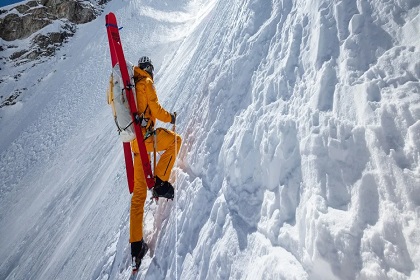
Everest: The Other Side (2026) is a documentary film about adventure, human ambition, love, grief, and the risks people take when they want to achieve something extraordinary. Directed by Elizabeth Chai Vasarhelyi and Jimmy Chin, the film follows experienced ski mountaineers Jim Morrison and Hilaree Nelson as they pursue a remarkable dream: climbing the difficult north face of Mount Everest and skiing back down.
The documentary is more than a story about climbing a mountain. It explores the relationship between two people who share a passion for extreme adventure, the painful consequences of losing someone you love, and the difficult question of whether a personal dream is worth risking everything to achieve. Rotten Tomatoes+2
With its dramatic mountain landscapes, real-life danger, and emotional subject matter, Everest: The Other Side offers a different experience from a traditional adventure movie. Instead of relying on fictional characters and scripted action, it follows real people facing challenges that can have permanent consequences.
This review looks at the film’s story, real-life background, directing, cinematography, emotional themes, strengths, weaknesses, and overall value for viewers. It also explains who may enjoy the documentary and what makes it different from other films about Mount Everest.
Everest: The Other Side (2026) Movie Details
Movie title
Everest: The Other Side
Release year
2026
Genre
Documentary, Biography, Sports
Directors
Elizabeth Chai Vasarhelyi and Jimmy Chin
Main subjects
Jim Morrison and Hilaree Nelson
Runtime
Approximately 110–115 minutes, depending on the listing
Production companies
National Geographic Documentary Films and Little Monster Films
Release date
October 30, 2026, for its announced theatrical release
Sources: Rotten Tomatoes and Venice Film Festival.
1. What Is Everest: The Other Side (2026) About?
Everest: The Other Side (2026) tells the story of two accomplished mountain adventurers who share an ambitious goal involving one of the world’s most dangerous climbing routes. Jim Morrison and Hilaree Nelson are experienced ski mountaineers whose relationship grows through their shared love of the mountains and their willingness to face difficult challenges.
Their dream is to climb the direct north face of Mount Everest and ski down it. This is not an ordinary climbing trip. The route presents severe physical and technical challenges, and the descent requires exceptional control, preparation, and judgment. A small mistake in such an environment can have life-changing consequences.
The film follows their relationship with this goal and examines what happens when a shared ambition becomes connected to personal loss. It is a documentary about real people rather than a fictional adventure with actors playing invented characters. La Biennale di Venezia+1
What makes the story especially powerful is the way it connects the physical challenge of climbing Everest with the emotional challenges experienced by the people involved. The mountain becomes more than a place to conquer. It becomes a setting in which love, fear, ambition, grief, and personal responsibility come into conflict.
For viewers who enjoy adventure documentaries, this combination gives the film several layers of meaning. Someone watching for the climbing may become interested in the relationship. Another viewer may begin by following the personal story and later find themselves thinking about the danger involved in the expedition.
The documentary also asks an important question: what happens when a dream becomes so important that a person continues pursuing it even after life has changed in ways they could never have expected?
That question gives Everest: The Other Side (2026) a more personal direction than a straightforward account of reaching a mountain summit.
2. The Real Story Behind the Film
One of the main reasons this documentary attracts attention is that its central events are connected to real experiences. Jim Morrison and Hilaree Nelson were respected ski mountaineers who shared a passion for ambitious mountain projects.
Their relationship developed alongside their sporting achievements. They had already demonstrated their ability to work in demanding environments, and their shared interest in technical ski descents helped shape their ambition to attempt Everest’s direct north face.
In 2018, Morrison and Nelson completed a notable ski descent of Lhotse, the world’s fourth-highest mountain. Their experience helped establish the background for their later Everest ambition. However, their plans were changed by tragedy when Nelson died in an avalanche on Manaslu in September 2022. Eye Filmmuseum+1
Her death changed the emotional meaning of the expedition. What had been a shared project became connected to Morrison’s experience of grief and his decision about whether to continue pursuing the dream.
The documentary does not rely on the usual fictional techniques of inventing a villain, creating an artificial rivalry, or adding an unexpected disaster for dramatic effect. Its central tension comes from the actual risks of mountaineering and the personal choices made by the people involved.
This is an important distinction for viewers. Real-life documentaries cannot always provide the neat endings associated with scripted adventure movies. They often leave audiences with difficult questions instead of simple answers.
In this case, the story offers a chance to consider the emotional consequences of pursuing a major ambition after losing someone who helped make that ambition meaningful.
The film’s real-life background also makes its dangerous scenes more serious. The people on screen are not protected by a fictional plot. The decisions they make in the mountains affect their actual lives and the lives of those who care about them.
3. The Main Story and Its Emotional Direction
At the heart of Everest: The Other Side (2026) is a story about a dream that grows beyond the original plan.
At first, the expedition can be understood as a sporting challenge. Morrison and Nelson want to accomplish something extremely difficult on a mountain that has tested experienced climbers for generations. Their goal requires technical ability, careful preparation, teamwork, and an understanding of changing mountain conditions.
As the story develops, however, the meaning of the challenge becomes more complicated. The loss of Nelson changes the circumstances under which the Everest dream is pursued.
This gives the documentary two connected storylines. One concerns the practical question of whether a difficult climb and ski descent can be completed. The other concerns the personal question of what it means to continue with a shared dream after losing the person who helped create it.
These storylines work together because neither can be understood fully without the other.
The physical challenge gives the film suspense. The personal history gives that suspense emotional weight. When the expedition faces a new obstacle, viewers are not simply wondering whether the climbers can overcome it. They are also thinking about why the goal matters and what its completion could mean to the people involved.
The film’s emotional direction is not always comfortable. Some viewers may admire the determination required to continue after a devastating loss. Others may question whether completing the expedition is the best way to honour a loved one.
That difference in interpretation is one of the documentary’s most interesting qualities. It does not need every viewer to agree with the choices being made. Instead, the story encourages people to consider how grief can influence ambition and how difficult it can be to separate personal meaning from personal risk.
4. Jim Morrison’s Role in Everest: The Other Side (2026)
Jim Morrison is central to the documentary because the Everest expedition becomes closely connected to his relationship with Nelson and his response to losing her.
Morrison is an experienced ski mountaineer, and the film places his technical skills alongside the emotional experience of pursuing an ambitious project under changed circumstances.
The documentary presents a complicated picture of determination. In adventure stories, determination is often shown as a positive quality that helps someone overcome obstacles. In real life, however, determination can have more than one meaning.
It can help a person continue working towards an important goal. It can also make it difficult to step back and reconsider whether that goal remains worth the cost.
This is where Morrison’s story becomes especially compelling. His decision to continue the Everest project invites viewers to consider the relationship between grief and action.
For some people, continuing a project after losing someone can provide a sense of direction. It may help preserve a connection to a shared experience or offer a way to move forward when ordinary life feels unfamiliar.
For others, moving forward may require accepting that some dreams cannot be completed in the way originally imagined.
Neither response can be judged fairly without understanding the person and the circumstances involved. The film’s value comes partly from allowing viewers to reflect on that uncertainty.
Morrison’s mountain experience is important, but his role is not limited to demonstrating technical skill. His story also shows that physical courage and emotional recovery are different challenges. A person may be highly capable in a dangerous environment while still struggling with a profound personal loss.
This gives the documentary an emotional dimension that should appeal to viewers who appreciate character-driven nonfiction films.
5. Hilaree Nelson’s Importance to the Story
Although Nelson died before the Everest project reached its later stages, her presence remains essential to the documentary.
She is not simply a person whose death explains why Morrison continues the expedition. Her achievements, personality, relationship with Morrison, and role in their shared ambitions form an important part of the story.
Nelson was an accomplished mountaineer whose career involved demanding expeditions and major technical challenges. Her experience helped shape the partnership at the centre of the film.
Understanding her contribution matters because it prevents the story from becoming only about what another person does after losing a partner.
A shared dream has two participants, and the reasons behind that dream often reflect the interests, values, and ambitions of both people. Nelson’s place in the documentary gives the audience a clearer understanding of what the Everest goal meant before her death changed the situation.
Her story also raises questions about how people remember those they have lost. A person’s legacy can be preserved through memories, relationships, achievements, and the values they shared with others. Completing an unfinished project is one possible response to loss, but it is not the only one.
The film invites viewers to consider how Nelson’s life continues to influence the people around her and the decisions they make.
This emotional foundation is important to the documentary’s wider meaning. Without it, the expedition might appear to be mainly a test of athletic ability. With it, the climb becomes part of a larger story about love, memory, and the complicated ways people respond to grief.
6. The Relationship Between Love and Adventure
One of the central themes of Everest: The Other Side (2026) is the relationship between love and shared ambition.
Morrison and Nelson’s connection is shaped partly by their interest in activities that demand unusual levels of preparation, trust, and commitment. Ski mountaineering is not a sport in which a person can ignore the decisions of others. Team members must understand each other’s abilities, communicate clearly, and recognise when conditions have become too dangerous.
These requirements can create a powerful sense of partnership. People who face difficult situations together may develop a deep understanding of one another’s strengths, weaknesses, fears, and motivations.
However, the same environment can also place pressure on a relationship. Extreme sports involve uncertainty, and the consequences of a mistake can extend beyond the people directly involved in the activity.
The documentary’s story encourages viewers to think about the balance between shared enthusiasm and shared responsibility.
When two people love the same activity, they may encourage one another to pursue goals that would seem unreasonable to someone outside their world. That encouragement can be a source of confidence and personal growth. It can also make it harder to recognise when ambition has become dangerous.
This does not mean that people should avoid difficult experiences or abandon every goal that involves risk. Instead, the film invites a more careful consideration of how people make decisions when passion and danger exist side by side.
The relationship at the centre of the documentary makes those questions personal rather than abstract. Viewers are asked to consider what it means to share a dream with another person and what happens when circumstances make that dream impossible to pursue together.
7. Why Mount Everest Is More Than a Setting
Mount Everest is one of the most recognisable mountains in the world, but its role in this documentary extends beyond its reputation.
The mountain represents a physical challenge that cannot be controlled completely by human skill. Even experienced climbers must respond to weather, snow conditions, altitude, terrain, and the possibility of sudden changes.
For the people attempting a difficult route, the mountain is not simply a destination. It is an environment that demands constant attention and respect.
The direct north face is especially important to the film’s central ambition. The documentary focuses on the attempt to climb this challenging side of Everest and ski down it, a descent that had not been successfully completed before the expedition described in the film’s promotional material. IMAX+1
That goal creates a clear source of suspense. The climbers must deal with steep terrain, changing conditions, physical exhaustion, and the limits of their equipment and experience.
Yet the mountain also serves as a reminder that not every challenge can be solved through determination alone.
In ordinary life, people often believe that hard work and careful planning will eventually lead to success. In extreme environments, preparation is essential, but it cannot remove every danger. Conditions can change, and a decision that seems reasonable at one moment may become unsafe later.
This uncertainty gives the film much of its tension. The audience can understand why the climbers want to succeed while also recognising that the mountain does not owe them a successful outcome.
The setting therefore supports both the adventure and the documentary’s emotional questions. Everest becomes a place where the desire to achieve something extraordinary meets the reality of human limits.
8. The North Face Expedition and Its Challenges
A major part of the documentary’s appeal comes from the practical difficulties involved in the expedition.
Climbing a high mountain requires more than strength. It demands endurance, technical ability, careful planning, appropriate equipment, and the ability to make sensible decisions when the body and mind are under pressure.
Ski mountaineering adds another layer of complexity. Reaching the summit is only one part of the journey. A successful ski descent requires suitable snow, a workable route, sufficient control, and the ability to manage dangerous terrain while already affected by altitude and fatigue.
At high elevations, even ordinary tasks can become difficult. The body receives less oxygen, energy is limited, and cold conditions place additional demands on the climbers. Concentration can become harder to maintain, making good judgment especially important.
The expedition also depends on teamwork. Climbers and guides must communicate clearly and coordinate their movements. Decisions about timing, weather, route conditions, and retreat can affect everyone involved.
These challenges help explain why the documentary’s central goal is so demanding. The participants are not simply trying to reach a familiar viewpoint. They are attempting a complex combination of mountaineering and skiing in an environment where mistakes can have serious consequences.
The film’s focus on the expedition allows viewers to appreciate the amount of preparation and judgment behind extreme sports. It also challenges the idea that success depends only on personal courage.
Courage matters, but so do patience, technical skill, teamwork, and the willingness to change plans when circumstances require it.
9. The Documentary’s Visual Style
The visual presentation is one of the most important elements of Everest: The Other Side (2026).
The directors, Elizabeth Chai Vasarhelyi and Jimmy Chin, have experience making documentaries in which physical danger and human ambition are closely connected. Their work on this film brings the audience into a demanding mountain environment while keeping the people involved at the centre of the story.
The cinematography is credited to Clair Popkin, Jimmy Chin, and Christopher Murphy. The production uses mountain footage to show the scale of the landscape and the difficult conditions faced by the expedition. La Biennale di Venezia+1
Large mountain landscapes can be beautiful, but beauty is only part of their effect. A wide view of a steep slope can also communicate isolation, exposure, and the small size of a human being in an enormous natural environment.
This contrast is especially effective in a story about extreme mountaineering. The mountain can look peaceful from a distance, yet the people moving across it may be dealing with serious physical and technical challenges.
Close views of climbers and their equipment can help make the experience more immediate. Wider shots show the terrain around them and help viewers understand why the route is so difficult.
The documentary’s visual approach also has the potential to create a strong sense of height and exposure. Viewers who are uncomfortable with steep drops may find certain sequences tense, even when they are watching from a cinema seat.
However, visual spectacle alone cannot carry an entire documentary. The most meaningful images are those that support the human story, showing not only what the climbers are doing but also why their decisions matter.
10. The Role of Jimmy Chin and Elizabeth Chai Vasarhelyi
The directors play a major role in shaping the documentary’s balance between adventure and personal storytelling.
Jimmy Chin is known for his work as a climber, photographer, and filmmaker. Elizabeth Chai Vasarhelyi has directed documentaries that explore people pursuing difficult goals and the consequences of those pursuits.
Together, they previously directed Free Solo, a documentary about climber Alex Honnold and his attempt to climb El Capitan without a rope. Their experience working with demanding outdoor environments provides useful context for understanding the approach taken in Everest: The Other Side (2026). Roger Ebert+1
The directors’ involvement is particularly relevant because filming an extreme expedition requires careful decisions. The camera team must capture events without losing sight of the conditions under which the people are working.
A documentary about dangerous climbing also raises ethical questions. Filmmakers want to record important moments, but the presence of a camera should not turn an already risky situation into an unnecessary spectacle.
The directors must decide how to present the expedition, how much background the audience needs, and how to handle the emotional consequences of the events being documented.
Their challenge is not simply to produce impressive images. It is to create a film that gives viewers a meaningful understanding of the people involved.
The strongest parts of this type of documentary occur when the technical demands of the adventure and the emotional experiences of the participants support each other. The action gives the story momentum, while the personal material gives the action meaning.
11. The Film’s Treatment of Grief
Grief is one of the most important themes in Everest: The Other Side (2026).
The loss of Nelson changes the meaning of the expedition, placing Morrison’s personal response to tragedy alongside the practical demands of climbing Everest.
Grief does not affect everyone in the same way. Some people seek quiet and distance, while others become deeply involved in work, physical activity, or projects that give them a sense of direction. Neither response can be understood fully from the outside.
For someone who has lost a partner, continuing a shared ambition may feel like a way of maintaining a connection. The project can become a place where memories and present-day decisions meet.
At the same time, grief can make decisions especially complicated. A goal that once represented excitement and shared achievement may begin to carry additional emotional weight.
The documentary’s subject matter allows viewers to consider these possibilities without treating grief as a simple problem with an easy solution.
It also shows why emotional courage should not be confused with the absence of pain. A person can remain committed to a difficult goal while continuing to experience sadness, uncertainty, and loss.
The film’s emotional questions may be more interesting than a straightforward account of overcoming adversity because they do not necessarily lead to a single correct answer.
Is completing a shared dream a meaningful way to honour someone? Can a person separate a sporting goal from the memory of the person who inspired it? How should someone weigh personal meaning against the risks faced by friends, guides, and family members?
These questions give the documentary depth and make its story relevant to people who have never climbed a mountain.
12. Ambition, Obsession, and Personal Responsibility
The line between ambition and obsession is difficult to define, and Everest: The Other Side (2026) gives viewers a reason to think about it.
Ambition can encourage people to learn new skills, develop discipline, and work towards difficult goals. Many important achievements require persistence long after the first excitement has disappeared.
However, ambition can become harmful when a person stops considering the wider consequences of their choices.
In extreme mountaineering, this distinction is especially important because the consequences may affect an entire team. A climber’s decision can influence the safety of guides, partners, support staff, and other people who have responsibilities during the expedition.
The documentary’s central story therefore raises a question that goes beyond whether Morrison can complete the challenge. It asks whether the personal value of an achievement can justify the risks involved in pursuing it.
There is no simple answer that applies to every situation. People have different reasons for taking risks, and they may assess those risks differently. Yet the presence of personal meaning does not remove the need to think carefully about consequences.
The film can be appreciated as an adventure while still encouraging a critical view of extreme ambition.
A person does not have to reject the importance of achievement to recognise that retreat can sometimes be the wiser decision. Likewise, questioning a dangerous goal does not automatically mean that the goal has no personal value.
This tension gives the documentary much of its moral interest. It encourages viewers to look beyond the excitement of the challenge and consider the responsibilities that accompany it.
13. The Role of Family and Loved Ones
Extreme adventure rarely affects only the people taking part.
Family members and close friends may experience the excitement of a major expedition, but they can also carry the worry that comes with knowing how dangerous the activity can be.
In Nelson’s case, her death left behind two sons, making the consequences of the expedition deeply personal for the people who loved her. The documentary’s wider context includes the families who must live with the outcomes of high-risk decisions. AP News+1
This is an important part of the story because it expands the discussion beyond the climbers themselves.
A person pursuing a difficult dream may feel that the decision is primarily their own. However, the emotional consequences of an accident can extend to children, partners, parents, friends, and colleagues.
That does not mean that people should never undertake dangerous activities. It means that the decision deserves serious thought and honest communication.
The film’s subject matter gives viewers an opportunity to consider how personal ambition affects those who remain outside the expedition.
It also highlights the difference between choosing a risk for oneself and making a decision whose consequences other people may have to carry.
These questions may be uncomfortable, but they are part of what makes the documentary more than a celebration of sporting achievement.
14. The Importance of the Mountain Guides and Support Teams
Another important aspect of extreme mountaineering is the work performed by guides and support teams.
A major expedition depends on many people whose contributions may not receive the same attention as the central climbers. Their work can include route preparation, carrying equipment, managing logistics, assessing conditions, and helping the team respond to problems.
The documentary’s Everest setting makes this teamwork especially significant. A high-altitude expedition cannot be treated as the achievement of one person alone.
The decisions of the lead climbers matter, but those decisions exist within a wider network of experience and responsibility.
This is particularly important when discussing risk. People involved in an expedition may have different levels of influence over the plans and different reasons for accepting the dangers. A complete understanding of the story should consider the responsibilities and concerns of the whole team.
The film also creates an opportunity to think about the unequal ways in which risk and recognition can be distributed in the world of high-altitude adventure.
Some participants receive international attention for their achievements, while other workers may have less control over the public story despite making essential contributions.
Giving proper attention to the people who support an expedition helps viewers understand the practical and ethical realities of mountaineering.
It also reinforces a wider lesson: major achievements often depend on cooperation, and the people who make an achievement possible deserve recognition for their work.
15. The Film’s Sound and Music
Sound plays an important role in adventure documentaries because the environment itself can communicate tension.
Wind, movement across snow, the handling of equipment, and the sounds of people working in difficult conditions can make the experience feel immediate. These details help the audience imagine the physical environment without requiring constant explanation.
Music can support that experience by adding emotional weight to important moments. A carefully placed musical passage may create anticipation, emphasise a difficult decision, or provide space for reflection after a tense sequence.
However, music can also become distracting if it tells viewers exactly how they should feel. A documentary about grief and extreme danger benefits from allowing some moments to remain quiet and uncertain.
The soundtrack is credited to Caroline Ho, while the film’s sound team includes Deborah Wallach, Tom Fleischman, Ric Schnupp, Jim Hurst, and Allie Boettger. La Biennale di Venezia
The value of sound in a film like this is not limited to making the images more dramatic. It can help connect the viewer to the people and the environment, making the distance between the audience and the expedition feel smaller.
For viewers watching in a cinema, the combination of large-scale mountain imagery and detailed sound may create a more immersive experience than watching on a small screen.
16. Is Everest: The Other Side (2026) an Action Movie?
Although the documentary contains high-risk climbing and skiing, it is not a conventional action movie.
Traditional action films usually build their stories around scripted conflicts, fictional characters, and carefully arranged sequences. Their dramatic moments are designed to fit a planned narrative.
Everest: The Other Side (2026) follows real people and real events. Its tension comes from uncertainty, the difficulty of the expedition, and the consequences of decisions made in dangerous conditions.
This difference matters when deciding what to expect.
Viewers looking for continuous action may find the documentary more reflective than a typical adventure thriller. Some of its most important moments concern relationships, preparation, memories, and the emotional meaning of the expedition.
The mountain sequences provide excitement, but the film also asks viewers to think about the people behind the challenge.
The result is a documentary that combines elements of adventure cinema with biography and personal drama. It may appeal to fans of action-oriented films, but its main purpose is not simply to entertain through danger.
Instead, it uses the expedition to explore what motivates people to pursue extraordinary goals and what happens when those goals become connected to loss.
17. What Makes the Documentary Different From Fictional Everest Films?
Mount Everest has inspired many films, including documentaries and fictional survival stories. Some focus on the physical struggle of climbing, while others use the mountain as a setting for stories about friendship, leadership, survival, or human conflict.
What distinguishes Everest: The Other Side (2026) is its focus on a real relationship and an ambitious ski mountaineering project.
The documentary does not depend on invented characters to create emotional stakes. Its central figures have real achievements, personal histories, and relationships that existed before the film was made.
That reality changes the way the audience experiences the story. The danger is not simply a dramatic device. It is a genuine part of the expedition.
The film also connects the mountain challenge with the question of how a person responds to the loss of a loved one. This creates a different emotional focus from a fictional survival film whose main objective is to show whether a group can escape a dangerous situation.
Another difference is the documentary’s uncertainty. Even when the audience knows the broad outcome of an expedition, the details of the journey can remain tense because the decisions and difficulties are real.
The film may therefore appeal to viewers who enjoy both outdoor adventure and personal documentaries.
It offers a chance to see mountaineering not only as a test of strength but also as an activity shaped by relationships, memory, judgement, and responsibility.
18. The Film’s Strongest Qualities
Several qualities make Everest: The Other Side (2026) an interesting documentary for viewers who appreciate real-life adventure stories.
A compelling real-life subject
The story begins with two accomplished mountaineers and their shared ambition. Their relationship gives the expedition an emotional foundation that goes beyond the desire to achieve a sporting first.
A challenging physical setting
The direct north face of Everest provides a difficult environment in which preparation, technical skill, and decision-making matter. The mountain is a genuine source of tension rather than a decorative background.
A personal story of loss
Nelson’s death changes the meaning of the expedition and introduces questions about memory, grief, and the reasons people continue pursuing difficult goals.
Experienced documentary filmmakers
The directors bring experience in documenting people who take on demanding physical challenges. Their approach combines adventure footage with an interest in the human motivations behind the activity.
Questions without easy answers
The documentary’s subject matter encourages viewers to consider both the value of extraordinary achievement and the consequences of accepting extreme risk.
Together, these elements give the film a wider appeal than a documentary aimed only at experienced climbers.
19. The Film’s Possible Weaknesses
A fair review should also recognise that the documentary’s approach may not work equally well for every viewer.
The subject matter may feel repetitive
A story built around one major expedition naturally returns to preparation, danger, ambition, and difficult decisions. Some viewers may feel that certain ideas receive more attention than necessary.
The emotional questions may remain unresolved
People who prefer clear conclusions may find the film frustrating. Its central questions involve grief, risk, and personal responsibility, all of which are difficult to resolve with a simple answer.
The climbing may be more important than the wider story for some viewers
People who want detailed technical explanations of every stage of the expedition may wish for more information about particular climbing decisions and the practical details of the route.
The emotional material may be difficult
The film deals with death, grief, and the risks of extreme adventure. These themes may be upsetting for viewers who prefer lighter entertainment.
These points do not necessarily make the documentary unsuccessful. In some cases, they reflect the difficult nature of the story itself. Nevertheless, they help explain why the film may appeal more strongly to viewers who enjoy thoughtful documentaries than to audiences looking for simple escapism.
20. Who Should Watch Everest: The Other Side (2026)?
The documentary may appeal to several different groups of viewers.
Adventure documentary fans: People who enjoy real-life expeditions, dangerous environments, and difficult physical challenges may find the mountain sequences particularly interesting.
Mountaineering enthusiasts: Experienced climbers and outdoor sports fans may appreciate the focus on a demanding route and the practical challenges of combining climbing with skiing.
Biography lovers: Viewers interested in the lives of real people may appreciate the attention given to Morrison and Nelson’s relationship, achievements, and personal histories.
Fans of emotional documentaries: Those who enjoy films about grief, memory, and personal transformation may find the story meaningful beyond its sporting context.
Viewers interested in ethical questions: People who like documentaries that encourage discussion may appreciate the questions about ambition, responsibility, and the consequences of high-risk choices.
The film may be less suitable for viewers who want a light comedy, a conventional romance, or an action movie with a predictable fictional plot.
It also contains difficult subject matter relating to death and dangerous outdoor activity, so viewers should consider whether they are comfortable with those themes before watching.
21. Is Everest: The Other Side (2026) Worth Watching?
For viewers interested in real-life adventure and personal stories, Everest: The Other Side (2026) is a strong candidate for a worthwhile documentary experience.
Its main appeal comes from the combination of a difficult mountain challenge and a deeply personal story. The expedition gives the film physical tension, while the relationship between Morrison and Nelson gives the journey emotional meaning.
The documentary also offers more than a simple account of reaching a summit. It raises questions about what motivates people to pursue difficult goals, how grief can influence decisions, and whether achievement should always be treated as the highest priority.
Its visual presentation and experienced directing team add to its appeal, particularly for viewers who appreciate large-scale outdoor cinematography.
However, it is important to approach the film with the right expectations. This is a documentary about real people and complex choices, not a fictional adventure designed to provide uncomplicated excitement.
Some viewers may admire Morrison’s determination, while others may question the risks involved. Both reactions can be part of a meaningful response to the story.
Overall verdict: Everest: The Other Side (2026) is worth considering for viewers who enjoy adventure documentaries with emotional depth. Its combination of mountaineering, personal loss, and difficult moral questions gives it a clear identity among films about extreme sports.
22. Final Thoughts on Everest: The Other Side (2026)
Everest: The Other Side (2026) explores what happens when an extraordinary sporting ambition becomes connected to love, grief, and the challenge of moving forward after a devastating loss.
Through the story of Jim Morrison and Hilaree Nelson, the documentary examines the attraction of difficult goals and the risks that can accompany them. Its mountain setting provides suspense and visual scale, but the personal story gives the expedition its deeper meaning.
The film’s greatest strength is its ability to make viewers think about the people behind the achievement. Reaching a summit or completing a difficult ski descent may be a remarkable accomplishment, but the reasons for pursuing such goals are often more complicated than they appear.
By connecting adventure with personal responsibility, the documentary encourages audiences to look beyond the excitement of the expedition and consider its emotional consequences.
It may not provide easy answers to every question it raises, but that uncertainty is part of what makes the subject interesting. The story invites viewers to reflect on ambition, relationships, risk, and the many ways people try to find meaning after loss.
For anyone searching for an Everest: The Other Side (2026) movie review, the essential point is that this is a real-life mountain documentary with a strong emotional focus. It is best approached as a story about people and their choices as much as a story about climbing.
23. Where to Find More Information
The following sources provide additional information about the documentary, its release, and its reception.
- Official National Geographic and Disney film information — for information about National Geographic documentaries and related releases.
- Rotten Tomatoes: Everest: The Other Side (2026) — for critic reviews, ratings, and movie details.
- Venice Film Festival: Everest: The Other Side — for the festival listing, director information, and production credits.
- RogerEbert.com review — for additional critical discussion of the documentary.
- IMAX: Everest: The Other Side (2026) — for release information and the film’s official synopsis.
The film’s announced theatrical release is October 30, 2026. Availability may differ by country and cinema, so check local listings for current screening information.