
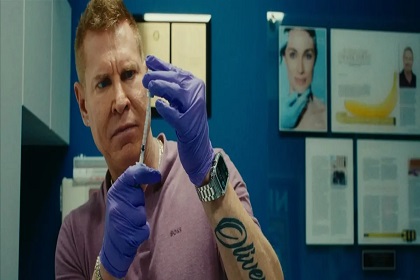
Manhood (2026) is a documentary directed by Daniel Lombroso that explores male confidence, body image, personal insecurity, and the pressure some men feel to meet society’s expectations of masculinity. The film follows Dallas entrepreneur Bill Moore as he tries to make penis enlargement procedures more common, while also examining the personal experiences of men who consider these treatments. Coming Soon+1
This review looks at the documentary’s story, direction, main participants, central themes, strengths, weaknesses, and overall message. It uses simple English to explain what makes the film interesting and why its subject goes beyond physical appearance.
Manhood (2026) Movie Overview
Movie information
| Category | Details |
|---|---|
| Movie title | Manhood |
| Release year | 2026 |
| Genre | Documentary, drama |
| Director | Daniel Lombroso |
| Runtime | Approximately 91 minutes |
| Language | English |
| Country | United States |
| Main participants | William Moore, Ruben Ramirez, David Smith |
| Main subject | Masculinity, body image, confidence, and male insecurity |
Roger Ebert+2
The documentary premiered at the 2026 SXSW Film & TV Festival. Its subject may initially sound unusual, but the film uses it to explore a wider question: why do some people feel that changing their bodies will help them become more confident, respected, or accepted? Sheffield DocFest+1
That question gives Manhood (2026) a wider purpose. Rather than treating its subjects as people who simply want to change their appearance, the documentary examines the feelings and experiences behind their decisions.
Official film information is available through the Manhood official website.
What Is Manhood (2026) About?
The central idea behind Manhood (2026) is the relationship between a man’s body and his sense of self-worth. The documentary follows Bill Moore, a Dallas entrepreneur who wants to make penis enlargement procedures as familiar to the public as other cosmetic treatments. Through his work and the experiences of two men connected to the subject, the film explores why physical appearance can become such an important part of personal identity. Coming Soon+1
The story is not simply about cosmetic procedures. It is about the thoughts that can lead a person to consider changing his body in the first place.
Some people want to look younger. Others want to feel attractive, improve their confidence, or escape years of embarrassment. For the men featured in this documentary, physical concerns are connected to larger questions about masculinity, acceptance, and personal happiness.
The film asks viewers to look beyond the surface. A man may appear confident in public while privately struggling with doubts about his appearance. Someone who seems determined to change his body may also be trying to overcome painful memories or feelings of not belonging.
These experiences make the documentary more personal than its subject might suggest.
Director Daniel Lombroso approaches a sensitive topic by connecting the physical side of cosmetic treatment with the emotional experiences of the people involved. The result is a documentary that encourages viewers to think about the pressures placed on men and the lengths some may go to meet expectations that are difficult to satisfy. Roger Ebert+1
Manhood (2026) Story Review
The documentary follows three central figures whose experiences help explain different sides of the same issue.
Bill Moore is an entrepreneur who works in the cosmetic treatment industry. He wants male enhancement procedures to become more accepted and widely discussed. Through his work, the film examines how cosmetic services are marketed and how personal insecurity can create demand for products and procedures designed to change the body.
Moore is an important part of the documentary because he is not simply an outside observer. He has a professional interest in the industry he promotes. His ambitions raise questions about the difference between offering a service that people want and encouraging people to believe that they need it.
The film also follows Ruben Ramirez, a father of five whose interest in male enhancement is connected to his own feelings about his body and identity. His story brings financial responsibility and family life into the discussion. A decision that may seem personal can also affect the people who depend on someone financially and emotionally.
David Smith provides another perspective. His experience involves male enhancement and the consequences of seeking treatment from an irresponsible provider. His story brings the risks of cosmetic procedures into sharper focus and shows why the search for confidence can become dangerous when proper care and professional standards are missing. Roger Ebert+1
These stories give the documentary a human centre. Instead of discussing masculinity only as an abstract idea, Lombroso connects it to real decisions, personal histories, relationships, and physical consequences.
The film’s subject can be uncomfortable, but that discomfort is part of its purpose. It asks viewers to consider why a particular body feature can carry so much emotional meaning for some men.
It also raises a question that applies to many areas of life: when someone wants to change their appearance, are they pursuing a goal they genuinely value, or are they trying to escape the judgment of other people?
The documentary does not reduce every experience to one explanation. Instead, it presents different individuals whose motivations and circumstances are not identical.
Understanding the Main Character, Bill Moore
Bill Moore is one of the documentary’s most important figures because his business sits at the centre of its subject.
He wants male enhancement to become a more familiar part of the cosmetic treatment industry. In a society where people can openly discuss skincare, hair restoration, and other appearance-related treatments, he sees an opportunity to bring a more private procedure into public conversation.
From a business perspective, this ambition raises questions about changing public attitudes. A service that once seemed embarrassing or unusual may become more acceptable when people hear about it frequently, see it discussed online, or encounter others who have used it.
However, the documentary also examines the emotional side of Moore’s work. His interest in appearance is not presented as a completely separate issue from his personal experiences. His own relationship with confidence and physical beauty helps viewers understand the world in which he operates. Roger Ebert+1
This makes his role more complicated than that of a simple business owner.
On one hand, he is working to normalise a service that some men actively seek. On the other hand, his work exists in a market where insecurity can create demand. If customers believe a physical change will make them more desirable or successful, their hopes may become part of the reason they spend money.
The important question is not whether every cosmetic procedure is wrong. People have different reasons for making decisions about their bodies. The question is whether those decisions are based on realistic expectations, informed consent, and a clear understanding of the risks.
Moore’s presence gives Manhood (2026) a way to explore this tension without limiting the discussion to the men who receive treatments.
It also encourages viewers to think about how personal experience can influence professional ambition. A person’s work may reflect not only a business opportunity but also ideas about beauty, confidence, and the kind of life worth pursuing.
Ruben Ramirez and the Pressure to Feel Masculine
Ruben Ramirez’s story adds a different emotional dimension to the documentary.
As a father of five, he has responsibilities that extend beyond his personal wishes. His interest in male enhancement becomes a way for the film to explore the relationship between self-image, spending, family life, and the pressure to feel like a successful man.
For many people, confidence is closely connected to how they believe others see them. A person who feels physically inadequate may worry that the perceived weakness will affect romantic relationships, social standing, or respect from others.
Such concerns can become especially difficult when someone believes masculinity must be demonstrated through physical qualities.
The documentary explores how these expectations can influence Ruben’s decisions. His story also connects personal insecurity with the messages men encounter through online content and discussions about becoming an ideal version of themselves. Roger Ebert+1
This part of the film is important because it moves the discussion away from physical measurements alone. The deeper issue is the meaning a person attaches to those measurements.
A man may believe that changing his appearance will resolve a lack of confidence. Yet confidence can also be affected by relationships, financial stress, childhood experiences, social acceptance, and the way someone speaks to himself.
Physical changes do not automatically resolve these other concerns.
Ruben’s experience therefore encourages viewers to consider the wider consequences of decisions made under emotional pressure. It also raises questions about how people balance personal desires with obligations to their families.
The film does not need to suggest that people should ignore their appearance. Instead, it asks whether a person has examined the reasons behind a decision and whether the expected benefits justify the cost and potential risks.
That is a more useful question than simply judging someone for wanting to look different.
David Smith’s Experience and the Risks of Cosmetic Procedures
David Smith’s story brings a serious warning into the documentary.
His experience involves a harmful outcome after seeking male enhancement treatment from an irresponsible provider. The consequences make his story an important contrast to the promise that a cosmetic procedure can improve confidence or personal satisfaction. Roger Ebert+1
Cosmetic treatments are often discussed in terms of their intended results. Advertising may focus on the desired appearance, the treatment process, or the possibility of feeling more comfortable in one’s body. However, the risks deserve equal attention.
Any medical or cosmetic procedure should be approached with careful research, appropriate professional advice, and a realistic understanding of possible complications. A provider’s claims should not replace independent medical guidance.
David’s experience illustrates why these precautions matter. When someone is unhappy with his body, he may be particularly interested in a service that promises a solution. That emotional pressure can make it harder to evaluate the provider, question exaggerated claims, or consider alternatives.
The documentary connects David’s experience to his wider personal background. His story is not presented only as a physical problem; it also involves the difficulties of acceptance and the desire to feel comfortable with himself. Roger Ebert+1
This makes his experience especially relevant to the film’s larger argument.
A procedure may aim to change a physical feature, but the person receiving it brings a whole life into the treatment room. His fears, expectations, relationships, and past experiences can influence what he hopes to gain.
When a treatment produces a harmful outcome, the consequences may therefore extend beyond the body.
David’s story also highlights the importance of ethical responsibility in the cosmetic industry. Providers have a duty to communicate honestly, explain risks, and avoid taking advantage of a person’s insecurity.
For viewers, this section may be among the most uncomfortable parts of Manhood (2026). However, it helps prevent the film from becoming a simple story about appearance and ambition. It reminds the audience that decisions made in pursuit of confidence can carry real consequences.
The Meaning of Masculinity in Manhood (2026)
Masculinity is one of the main themes of the documentary.
Different societies have different ideas about what makes a man successful, attractive, respected, or strong. Some expectations are connected to responsibility, honesty, courage, and care for others. Others focus heavily on physical appearance, sexual confidence, wealth, social status, or the ability to dominate a situation.
Problems can arise when these expectations become rigid rules.
A man who believes he must meet every ideal may find it difficult to accept ordinary differences between himself and others. Instead of treating his body as one part of his identity, he may see it as evidence that he is succeeding or failing as a man.
Manhood (2026) examines this connection through its subjects and their interest in male enhancement. The documentary asks why a physical feature can become linked to self-worth and how cultural expectations can influence private choices. Sheffield DocFest+1
This subject matters because masculinity is not a single, fixed standard. Men have different bodies, personalities, experiences, and priorities. There is no single physical appearance that determines whether someone is mature, responsible, confident, or worthy of respect.
Yet the pressure to meet a narrow ideal can be difficult to escape, especially when the same messages appear repeatedly in entertainment, advertising, online discussions, and social groups.
The film encourages viewers to question these messages rather than accept them automatically.
It also invites a broader understanding of strength. Being strong does not necessarily mean hiding insecurity or refusing to discuss difficult feelings. It can mean recognising a problem, asking for help, making a careful decision, or accepting that some expectations are unrealistic.
In this sense, the documentary’s title points toward a larger question. What does it actually mean to be a man?
The film suggests that the answer cannot be reduced to anatomy. Personal responsibility, empathy, honesty, and the ability to treat oneself and others with respect are also important parts of a meaningful life.
That message gives the documentary relevance beyond its specific subject.
Body Image and the Search for Confidence
Body image is another major theme in Manhood (2026). It refers to the way people see, think about, and feel about their physical appearance.
Some people are comfortable with their bodies, while others spend a great deal of time worrying about features they dislike. These feelings can influence their clothing choices, relationships, social activities, and willingness to appear in public.
Men experience body-image concerns too, even though conversations about the subject have often focused more on women.
The documentary brings attention to a side of male insecurity that many people may find difficult to discuss openly. It examines why some men become dissatisfied with their bodies and why they may believe that cosmetic procedures will help them feel better about themselves. Roger Ebert+1
One reason body-image concerns can become complicated is that people rarely judge themselves in isolation. They compare themselves with other people, including celebrities, social media personalities, and individuals they see in adult entertainment.
These comparisons can create unrealistic expectations. When someone repeatedly sees carefully selected images of bodies that appear to meet an ideal standard, ordinary physical differences may begin to feel like personal failures.
The problem becomes more serious when a person starts to believe that changing a particular feature is necessary for happiness or acceptance.
Manhood (2026) explores this connection without suggesting that every person who chooses a cosmetic procedure has the same motivation. People make these decisions for different reasons, and their experiences should not be treated as identical.
However, the documentary encourages viewers to look carefully at the relationship between appearance and self-worth.
A person may feel happier after making a change to their body. Yet lasting confidence can also depend on how that person thinks about himself, how he handles criticism, and whether he feels accepted by people who matter to him.
This is one of the film’s most valuable subjects. It reminds viewers that confidence is not always something that can be purchased or achieved through a physical transformation.
The Influence of Social Media and Online Masculinity
Online culture is an important part of the wider conversation surrounding Manhood (2026).
The internet gives people access to information, communities, entertainment, and advice. It can help individuals discuss experiences they might otherwise keep private. However, online spaces can also spread unrealistic expectations about appearance, success, relationships, and masculinity.
The documentary examines the influence of online personalities who promote particular ideas about becoming a more successful or desirable man. Some of these messages encourage men to focus heavily on physical characteristics and social status. Roger Ebert+1
This matters because repeated messages can gradually influence how people judge themselves.
A man who spends a lot of time listening to people who present physical perfection as an essential part of masculinity may begin to believe that he needs to change his body. If the same content also promises greater confidence, romantic success, or respect, the message can become even more persuasive.
The difficulty is that online advice does not always reflect the experiences of ordinary people. Some creators build their audiences around strong claims, dramatic opinions, or the promise of quick solutions.
Viewers therefore need to distinguish between useful information and content designed mainly to attract attention.
The film’s exploration of online masculinity raises an important question: who benefits when men feel that they are never attractive, wealthy, successful, or physically impressive enough?
In some cases, the answer may include businesses selling products or procedures intended to solve the problems that the same culture encourages people to worry about.
This does not mean that every product or service is dishonest. It means that consumers should be aware of how insecurity can influence their decisions.
The documentary encourages a more thoughtful approach to online messages about masculinity. Rather than accepting every claim, viewers can question its evidence, consider its financial motives, and think about whether the advice supports their long-term well-being.
The Role of Pornography in Body Expectations
Another difficult subject connected to the documentary is the influence of adult entertainment on male body image.
People may compare their bodies with those they see on screen. However, performers and productions do not necessarily represent the full range of ordinary human bodies. Selection, presentation, editing, and the demands of entertainment can all affect what viewers see.
For someone who already feels insecure, these comparisons may strengthen the belief that his body is inadequate.
The documentary connects this pressure with David Smith’s experience and the wider search for physical change. His story helps demonstrate how expectations about appearance can influence decisions with serious consequences. Roger Ebert+1
The important point is that a person’s worth should not be measured against the appearance of performers or against an ideal created for entertainment.
Real relationships involve much more than physical features. Communication, mutual respect, emotional connection, and trust all contribute to how people experience intimacy.
When someone believes that a particular physical characteristic determines whether he can be loved or respected, he may overlook these other parts of life.
Manhood (2026) uses its subject to examine that tension. The film does not need to claim that every viewer responds to adult entertainment in the same way. Instead, it draws attention to the possibility that repeated comparisons can contribute to dissatisfaction.
This section may encourage some viewers to reconsider where their expectations come from and whether those expectations reflect their own values.
Daniel Lombroso’s Direction
Daniel Lombroso directs Manhood (2026) with a documentary approach that brings together personal stories, uncomfortable questions, and moments of dark humour.
The subject could easily be presented as a series of jokes about men who want to change their bodies. However, that approach would overlook the emotional experiences that make the documentary worth discussing.
Lombroso instead examines the people behind the decisions. His approach allows viewers to consider their insecurities without automatically dismissing them as foolish or embarrassing. Roger Ebert+1
This is an important directorial choice.
Documentaries dealing with sensitive subjects must balance honesty with respect. If a filmmaker focuses only on the most unusual details, the people involved can become spectacles rather than individuals. If the filmmaker avoids every uncomfortable issue, the result may feel incomplete.
Manhood (2026) attempts to find a balance between these approaches. It does not hide the unusual or uncomfortable nature of its subject, but it also considers the emotional experiences behind the pursuit of cosmetic change.
The director’s decision to follow several people provides different perspectives. Bill Moore represents the business side of the issue, while Ruben Ramirez and David Smith help show how personal circumstances and individual experiences can influence decisions about the body.
This structure gives the film more depth than a documentary focused on a single procedure alone.
It also helps viewers understand that people can approach the same subject with different expectations and different levels of risk.
Cinematography and Visual Presentation
The cinematography by Vittoria Campaner supports the documentary’s close look at its subjects. The film runs for approximately 91 minutes and uses personal access to examine the people and circumstances surrounding male enhancement. Sheffield DocFest+1
In a documentary of this kind, visual presentation serves a different purpose from the spectacle often found in fictional films.
The camera helps establish a sense of place, introduces the people being followed, and allows the audience to observe their expressions and reactions. These details can matter when a subject involves embarrassment, uncertainty, and personal vulnerability.
The film also includes clinical settings connected to the procedures it examines. Some material is graphic, so viewers who are uncomfortable with medical needles or intimate medical procedures should be aware of that before watching. Roger Ebert+1
Such scenes are relevant to the subject because they show that cosmetic enhancement is not merely an abstract idea. It involves real bodies, actual procedures, and decisions that may have physical consequences.
The visual approach also supports the contrast between the promise of a desired result and the reality of undergoing treatment.
Rather than making the subject look simple, the documentary encourages viewers to consider its practical and emotional complexity.
Editing, Pacing, and Story Structure
At approximately 91 minutes, Manhood (2026) has room to explore several related perspectives without becoming a feature-length series. Roger Ebert+1
The decision to follow three central figures gives the documentary a clear structure. Each person contributes a different part of the discussion, allowing the film to move between business, personal motivation, and the consequences of treatment.
This structure is useful because the subject could otherwise become repetitive. A documentary that discussed only cosmetic procedures might struggle to explain why people seek them or why their experiences differ.
By moving between the main participants, the film can explore the wider pressures surrounding their decisions.
The editing also helps the documentary connect personal stories with larger questions about masculinity and online culture. The result is a discussion that moves beyond the physical procedure itself.
A possible limitation of this approach is that three main experiences cannot represent every man’s relationship with body image. Men differ widely in their backgrounds, beliefs, relationships, and reasons for considering cosmetic treatment.
The documentary should therefore be understood as an examination of particular experiences rather than a complete account of male insecurity worldwide.
Nevertheless, its focused structure gives the audience a manageable way to consider a complicated subject.
The Documentary’s Use of Dark Humour
The title and subject of Manhood (2026) may initially suggest a comedy. The documentary does contain dark humour, but its purpose is more serious than simply making viewers laugh.
Humour can help people approach subjects that are difficult to discuss. It can also reveal contradictions in social expectations and show how unusual certain beliefs may appear when examined closely.
In this film, the contrast between the commercial ambitions surrounding male enhancement and the personal insecurity of the men involved creates opportunities for uncomfortable humour. Critics have noted the documentary’s ability to combine humour with empathy. Rotten Tomatoes+1
However, the humour does not remove the seriousness of the subject.
A person may make a decision that others find difficult to understand, but the reasons behind that decision can still involve genuine pain. Laughing at the situation should not prevent viewers from considering the emotional experiences that contributed to it.
The strongest use of humour in a documentary like this is the kind that encourages reflection rather than humiliation.
By balancing uncomfortable moments with a serious examination of its subjects, Manhood (2026) makes room for both amusement and sympathy.
What Makes Manhood (2026) Different?
Many documentaries explore beauty standards, cosmetic surgery, or the influence of social media. What distinguishes Manhood (2026) is its specific focus on male enhancement and the expectations attached to masculinity.
The film examines a subject that some people may be reluctant to discuss openly. It connects private insecurity with business, popular culture, personal history, and the risks associated with cosmetic procedures. Sheffield DocFest+1
This combination gives the documentary several areas of interest.
First, it examines the commercial side of appearance. Businesses can respond to real customer needs, but their marketing can also influence what people believe they need to change about themselves.
Second, it looks at how insecurity affects personal decisions. The men in the documentary have individual motivations, and their experiences show why a physical concern may carry a deeper emotional meaning.
Third, it considers the wider social environment. Online personalities, cultural expectations, and comparisons with idealised bodies can shape the way people think about themselves.
Finally, it asks viewers to reconsider the meaning of confidence and masculinity.
These themes make the film relevant to discussions about body image more generally. Although its central subject is specific, its questions can apply to many kinds of cosmetic treatments and appearance-related decisions.
The Main Strengths of Manhood (2026)
One of the documentary’s strongest qualities is its willingness to examine a sensitive topic without treating it as nothing more than a joke.
The film recognises that people can have complicated reasons for wanting to change their bodies. It gives viewers an opportunity to consider those reasons rather than immediately judging the individuals involved.
Another strength is the range of perspectives. Bill Moore’s business ambitions, Ruben Ramirez’s personal concerns, and David Smith’s experience of harmful treatment provide different ways to understand the issue. Roger Ebert+1
The documentary also connects individual decisions to larger cultural pressures. This helps the story move beyond the question of whether a particular procedure is desirable.
Its use of dark humour is another notable feature. Humour makes parts of the discussion more accessible, while the serious consequences experienced by some of the participants prevent the film from becoming superficial.
The subject itself also gives the documentary a clear identity. It examines a relatively private concern and connects it to larger questions about masculinity, identity, and self-acceptance.
Finally, the film encourages discussion. Viewers may disagree about cosmetic procedures, commercial responsibility, or the influence of online culture, but the documentary provides several perspectives to consider.
The Weaknesses of Manhood (2026)
Although Manhood (2026) offers an interesting examination of male insecurity, it has limitations.
The first is the narrow range of experiences at the centre of the documentary. Three main participants can provide meaningful insight, but their stories cannot represent every man who struggles with body image or considers cosmetic treatment.
Some men may be motivated by personal preference rather than social pressure. Others may have different cultural experiences, medical circumstances, or expectations of masculinity. A wider selection of participants could provide a more complete picture.
A second limitation is the subject’s specialised nature. Viewers who have little interest in cosmetic procedures, body image, or discussions of masculinity may not find the film equally engaging.
The graphic medical material may also be uncomfortable for some audiences. Although such scenes relate to the subject, viewers who dislike needles or intimate medical procedures may find parts of the documentary difficult to watch. Roger Ebert+1
Another possible limitation is that personal stories cannot answer every question about the cosmetic industry. Viewers interested in detailed medical evidence, long-term outcomes, or industry-wide statistics may need additional reliable sources.
These limitations do not make the documentary unimportant. They simply help define what it can and cannot establish.
The film is best approached as a focused examination of several individuals and the pressures surrounding their choices, rather than as the final word on masculinity or cosmetic treatment.
Who Should Watch Manhood (2026)?
Manhood (2026) may appeal to viewers who enjoy documentaries about human behaviour, personal identity, social expectations, and controversial subjects.
People interested in psychology and body image may find its central questions especially relevant. The film examines how a person’s perception of his body can become connected to confidence, relationships, and the desire for acceptance.
Viewers interested in masculinity and modern online culture may also appreciate the documentary’s examination of the messages men encounter about appearance and success.
It may be useful for people who enjoy discussing the relationship between commercial industries and personal insecurity. The film raises questions about how businesses respond to customer concerns and how consumers can make informed choices.
However, it may not be suitable for everyone.
The documentary includes discussion of intimate body parts and cosmetic procedures, along with potentially graphic medical material. Viewers who prefer films without such content should consider this before watching.
It is also important to remember that the film explores a specific group of experiences. Its subjects should not be treated as representatives of all men or all people who choose cosmetic treatments.
For viewers who are comfortable with its subject, the documentary offers an opportunity to think about an issue that is often discussed in private but can have wider social and emotional consequences.
Is Manhood (2026) Worth Watching?
Whether Manhood (2026) is worth watching depends on what a viewer wants from a documentary.
If you enjoy films that examine real people, uncomfortable questions, and social pressures, it offers several reasons to watch. Its subject is unusual, but the questions behind it are familiar: What makes someone feel confident? How much should appearance matter? Can changing the body solve a problem that is partly emotional? And what responsibilities do businesses have when their customers are feeling insecure?
The documentary approaches these questions through Bill Moore and the experiences of Ruben Ramirez and David Smith. Their different circumstances help show that a desire to change one’s appearance can involve more than a simple preference for a particular physical feature. Roger Ebert+1
The film’s combination of dark humour and serious personal stories is another reason it may appeal to documentary fans. It does not treat every moment with the same emotional tone, allowing viewers to move between discomfort, curiosity, and sympathy.
However, people looking for a conventional fictional story, action, or light entertainment may not find it suitable. It is a documentary designed to explore a specific issue rather than provide an escape from everyday life.
Overall, Manhood (2026) is worth considering for audiences interested in body image, masculinity, and the psychological pressures associated with appearance. Its greatest value lies in encouraging viewers to think more carefully about the difference between looking the way society expects and feeling comfortable with who they are.
Manhood (2026) Movie Review: Final Verdict
Manhood (2026) is a documentary about more than cosmetic enhancement. Directed by Daniel Lombroso, it examines the relationship between male body image, personal insecurity, commercial ambition, and society’s expectations of masculinity. Roger Ebert+1
Its main strength is its willingness to look beyond the surface of a sensitive subject. By following three men with different experiences, the film shows how physical concerns can become connected to personal history, social acceptance, and the search for confidence.
The documentary also raises questions about online culture and the way unrealistic expectations can influence decisions about the body. Its treatment of the risks associated with cosmetic procedures gives the discussion practical importance.
Some viewers may find the subject uncomfortable, and the limited number of participants means the film cannot represent every experience. Nevertheless, its focused approach allows it to examine a difficult topic without reducing its subjects to simple stereotypes.
The larger message is that masculinity cannot be measured by one physical feature. Confidence, responsibility, empathy, and self-respect are also important, and they cannot always be achieved through a cosmetic change.
For viewers who appreciate thoughtful documentaries about human behaviour and social expectations, Manhood (2026) offers an unusual but meaningful subject for reflection.
Frequently Asked Questions About Manhood (2026)
What is Manhood (2026) about?
Manhood (2026) is a documentary about male enhancement, body image, confidence, and masculinity. It follows entrepreneur Bill Moore and examines the personal experiences of men who pursue or consider cosmetic procedures. Coming Soon+1
Who directed Manhood (2026)?
The documentary was directed by Daniel Lombroso. Sheffield DocFest+1
Who are the main participants in Manhood (2026)?
The main participants include William Moore, Ruben Ramirez, and David Smith. Their experiences provide different perspectives on male enhancement and the pressures surrounding physical appearance. Roger Ebert+1
What genre is Manhood (2026)?
It is a documentary with dramatic elements. Its main subjects include masculinity, cosmetic treatment, body image, and personal insecurity. IMDb+1
How long is Manhood (2026)?
The documentary has a reported runtime of approximately 91 minutes. Sheffield DocFest+1
Is Manhood (2026) a comedy?
It includes dark humour, but it is primarily a documentary examining serious issues related to body image, masculinity, and cosmetic procedures. Roger Ebert+1
Is Manhood (2026) suitable for all audiences?
The film is not necessarily suitable for every viewer. It discusses intimate body parts and cosmetic procedures and contains graphic medical material. Viewers should check the classification and content guidance provided by their local cinema or festival.
Where can I find more information about Manhood (2026)?
You can visit the official Manhood film website for production information, screenings, and other updates.
You can also read additional film information and reviews from RogerEbert.com and Rotten Tomatoes.
What is the main message of Manhood (2026)?
The documentary encourages viewers to look beyond physical appearance when thinking about masculinity and confidence. It explores how social expectations and personal insecurity can influence decisions about the body, while raising questions about the risks and responsibilities involved in cosmetic treatment.
Conclusion
Manhood (2026) takes a sensitive subject and uses it to explore larger questions about identity, confidence, and social expectations. Its focus on three men gives viewers a closer look at the personal experiences behind decisions about male enhancement.
The documentary’s most important contribution is its invitation to look beyond appearances. It encourages audiences to question unrealistic standards, think carefully about the influence of online culture, and recognise that a person’s value cannot be reduced to a physical measurement.
For viewers interested in thoughtful documentaries about masculinity and human behaviour, Manhood (2026) is a film worth considering. Its subject may be uncomfortable, but the questions it raises are relevant to wider conversations about self-image, personal choice, and what it means to feel comfortable in one’s own body.